
Why It Feels Worse On The Move
Toilet anxiety when travelling is a fear response centred on not reaching a toilet in time when escape feels harder, traffic, queues, trains, flights, long stretches with no toilets, or being far from home. It can feel like sudden urgency and panic, even when you are physically safe. The more you scan, plan and brace, the more the body learns to trigger the alarm early.
If you live with toilet anxiety when travelling, the idea of a simple journey can start to feel huge. Other people talk about looking forward to weekends away, days at the beach or long drives to see family.
If it is a short journey, a longer trip, a commute, or a holiday away from home, the pattern is usually the same, your system starts trying to guarantee a toilet before you have even left.
You find yourself quietly checking how long the journey will take, zooming in on the map for service stations, worrying about traffic, and wondering what happens if your body decides it needs the toilet when there is no obvious way out.
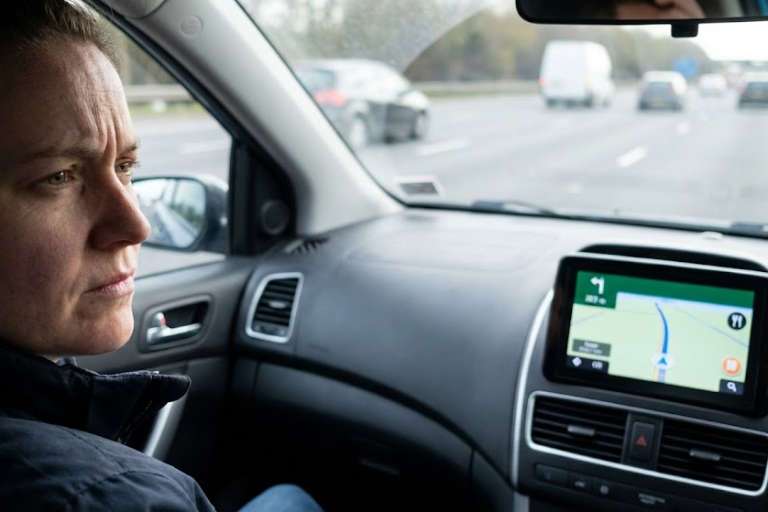
Toilet anxiety when travelling is not about being a bit fussy or liking your home loo. It is a specific way that the toilet anxiety loop shows up when you feel trapped, far from toilets or responsible for other people in the car, on the train or in the air.
Journeys remove a lot of the choices that usually help you feel safe, which is exactly when the nervous system tends to go onto high alert.
If your fear is mainly about shorter trips, traffic, commuting, or the moment you realise you might be “stuck”, you might also relate to toilet anxiety on journeys, it is the more specific journeys version of the problem.
If you want a quick starting point, take the Toilet Anxiety Assessment, it helps clarify what’s keeping the loop going. If the main thing you’re battling is that constant urgency feeling, you might also find Anxious About Needing The Toilet helpful.
On this page we stay focused on travel, journeys and movement instead of repeating everything from your main toilet anxiety page. Think of it as an applied guide to what happens when your fear of needing the loo collides with cars, buses, trains, planes, holidays and stays away from home, and what it takes to change that pattern.
Medication for gut or bladder issues and practical planning can sometimes ease part of the worry. But for many people, toilet anxiety when travelling keeps running the show even when tests are clear and the doctor has reassured them. That is because the problem is sitting in the way the brain and body have learned to respond to journeys, not only in the physical organs themselves.
The Surrey Institute of Clinical Hypnotherapy works directly with that learned response. Rather than teaching more coping strategies, we focus on rewiring the toilet anxiety loop so that journeys can gradually become something you choose again, instead of something you dread or avoid.
Not sure what a term means? Our toilet anxiety glossary explains common phrases like safety behaviours, interoception and near misses in plain English.
What toilet anxiety when travelling feels like day to day
Everyone has their own version of toilet anxiety when travelling, but the shape of it is surprisingly similar when people describe it in detail.
A journey appears in the diary, perhaps a half hour drive to a friend, a work trip, a family holiday, or even a short bus ride. Your mind jumps ahead and pictures being stuck with no toilet, trapped in the car on the motorway, wedged into a busy train, shut in by the seat belt sign, or queuing at airport security with nowhere to go. In seconds, your body responds with a rush of anxiety and a stronger urge to wee or poo.
In that moment it is easy to believe that the urge proves the danger is real. If your body is shouting at you, it must be because something awful is about to happen. So you start coping. Extra toilet trips before leaving, cutting back on drinks, insisting on certain seats, demanding frequent stops, avoiding certain roads, booking aisle seats at any cost, or planning journeys so that you never stray far from a familiar loo.
By the time you actually set off, toilet anxiety when travelling is already in full flow. You are watching every tiny feeling in your bladder or bowels, scanning the road or tracks for escape routes, and silently running worst case scenarios in your head. A short delay or a queue can be enough to explode into full panic. It is not that you are overreacting on purpose, it is that your nervous system has learned to treat journeys and toilets as life and death.
Why travel situations can intensify urgency fear
In everyday life you usually have ways to feel safe. You can excuse yourself, step outside, leave a shop, or simply choose a different route. Travel removes a lot of that choice. Once you are in slow moving traffic, on a packed train or in the air, it feels as if there is no simple way to stop. Your brain quite reasonably pays more attention to any possible threat, and for people with toilet anxiety when travelling the imagined threat is always about accidents and toilets.
Over time a functional pattern develops. Your nervous system begins to link specific travel cues with danger. The click of a seat belt, the sight of a long queue at the gate, the sound of train doors closing, the sign that says no stopping, the feeling of being far from a service station, all of these become learned triggers. Your system fires off a threat response before anything actually happens, which sends more signals to your bladder or bowels, and those signals are then read as proof that something is wrong.
From a medical point of view there may be nothing new going on in your gut or bladder. From a functional point of view your body is misreading the context and acting as if every journey is dangerous. Toilet anxiety when travelling is your brain trying very hard to protect you, but basing its decisions on old experiences and worst case stories rather than on what is actually happening today.
Simply telling yourself to calm down usually does little, because the system is reacting faster than your conscious thoughts. This is why working at the level of patterns and responses, rather than just at the level of reassurance, is so important in treatment.
Common situations where toilet anxiety when travelling appears
Almost any journey can activate the loop, but certain situations appear again and again when people talk about toilet anxiety when travelling.
For some people it shows up as toilet anxiety on holiday, for others it is the long car journey fear, the dread of public transport, or the panic of being on a plane with no easy exit. It can even be the hotel part, being somewhere unfamiliar, not knowing where the toilets are, and worrying you will not cope if your body suddenly demands certainty.
Cars are a big one. Long stretches of road with no obvious services, narrow lanes, roadworks, solid traffic and motorways with barriers on both sides can all feel like traps. You might insist on driving yourself so you can pull over, avoid motorways even when they are easier, or refuse lifts with friends in case you need to ask them to stop. The fear is rarely about crashing, it is about that image of suddenly needing the toilet when there is nowhere to go.
Public transport combines crowds, unpredictable delays and limited toilet access. A broken train loo, a carriage where you feel you cannot squeeze past people, a bus that does not stop where you expect, all of these can push toilet anxiety when travelling straight into panic. Many people quietly give up trains or buses altogether, which can make work, college or social life much harder.
Flying brings extra layers. Security queues, boarding calls, the moment the cabin crew ask everyone to sit down, the seat belt sign, queues for the tiny plane loo, and the sense that you are high in the sky with no escape route. For many people, toilet anxiety when travelling reaches its loudest point around flights and airport transfers, which is a shame because holidays are often the experiences they miss most.
Even when you reach your destination, the story continues. New toilets, shared bathrooms, thin walls, campsite blocks across a dark field, coach tours with set stops, long walks with no loos in sight, staying with friends or in hotels, all can wake up the fear. It is common to agree to plans then spend the whole time scanning for toilets and escape routes rather than actually enjoying yourself.
Over time, toilet anxiety when travelling reshapes choices in quiet ways. You might choose work that avoids commuting, avoid certain friends because they love road trips, or tell yourself you are just someone who prefers holidays at home, when the truth is that you feel unable to trust your body on journeys.
Coping with toilet anxiety when travelling, and why some strategies keep it stuck
When journeys feel risky, it is natural to try to manage every detail. You want to avoid embarrassment and stay in control, so you use whatever strategies you can. The problem is that many of the usual coping methods quietly teach your brain that travel really is dangerous unless you are constantly managing it.
- Repeated just in case visits going to the toilet again and again before leaving, even when little or nothing comes out, so your brain never gets to learn that starting a journey with a normal amount inside is safe
- Restricting food and drink cutting liquids for hours, skipping meals or avoiding certain foods, which can leave you dehydrated, tense and more sensitive to sensations
- Strict seating rules only sitting on aisle seats, near doors or near toilets, and feeling unable to travel at all if those places are not available
- Route and map checking planning every journey around toilets, checking street view and toilet apps in great detail, which keeps your attention fixed on danger rather than on where you are going
- Avoidance of certain journeys giving up flights, coaches, motorways or public transport altogether, which provides short term relief but reinforces the idea that your body cannot cope
From the outside these behaviours can look sensible. From the inside they feel essential. With toilet anxiety when travelling, however, each safety behaviour tells your nervous system that you are only safe because you are doing all this work. The gap between you and a normal journey grows wider every time.
Part of our work at The Surrey Institute of Clinical Hypnotherapy is to help you gently unwind those habits, at a pace that respects your limits. We are not interested in ripping away coping strategies and leaving you flooded. We are interested in helping your system discover that it can handle more than it currently believes, through carefully planned experiences and targeted hypnotic work.
What recovery from toilet anxiety when travelling can look like
Recovery is not about becoming someone who never thinks about toilets or who loves every journey. It is about bringing toilet anxiety when travelling back down to its proper size, so that travel decisions are based on what you want to do, not on what your bowels or bladder might do.
- Journeys feel possible again you can agree to reasonable trips without days of dread beforehand, even if you still feel a bit nervous
- Normal planning, not constant scanning you may still like to know roughly where toilets are, yet you no longer feel driven to check every detail or memorise every stop
- Discomfort becomes manageable you notice sensations in your body and take them into account, but they no longer automatically mean disaster in your mind
- More flexible travel choices you can sometimes be a passenger, take a train, sit away from the toilet, or fly when it matters, instead of automatically saying no
- Life opens up holidays, family visits, work options and simple days out become available again instead of staying on the imaginary shelf
With hypnotherapy we work directly at the pattern level. Sessions use focused attention and imagination to rehearse journeys in a safe way, update old danger messages, and build new pairings between travel and calmer states. Together we create a step by step plan, starting with small, achievable journeys and gradually expanding, so that your brain and body get real evidence that you can travel without the catastrophe your toilet anxiety keeps predicting.
Frequently asked questions about toilet anxiety when travelling
Toilet anxiety when travelling is a pattern where journeys trigger intense fear about needing the toilet and not being able to reach one in time. It is not just worrying about finding a toilet, it is a loop where thoughts about travel create strong bodily sensations, those sensations are treated as proof of danger, and you start to plan or avoid journeys around toilets rather than around your actual plans.
Situations where you feel trapped tend to amplify toilet anxiety when travelling. In a traffic jam, on a motorway, in a plane seat with the belt sign on or in a packed train carriage, it feels as though you have no quick escape. Your brain reads that lack of exit as serious danger and reacts accordingly. Once that threat response is active, sensations from your bladder or bowels feel stronger and more urgent, even if there is no real emergency.
Some people with toilet anxiety when travelling also have conditions like irritable bowel syndrome or an overactive bladder, and it is important that any genuine medical issues are checked and managed. At the same time, many people find that their reaction to journeys is far stronger than their diagnosis would explain. The anxiety loop and the learned response to travel become the main drivers. Addressing that pattern directly is often what makes the biggest difference to everyday life.
Sensible planning before long journeys is fine. For example, most people would avoid several strong coffees just before a flight. With toilet anxiety when travelling, the restriction often becomes extreme. People skip food and drink for hours, which can lead to headaches, dizziness and more anxiety. It also teaches the brain that journeys are only safe if you almost empty yourself completely. In recovery we usually aim to return to normal eating and drinking patterns while changing the underlying anxiety response, rather than relying on harsh restriction.
For many people, yes. Hypnotherapy allows us to work directly with the emotional learning underneath toilet anxiety when travelling. In sessions you can safely rehearse typical journeys in a focused, calm state, update old danger messages, and install new responses that you then test out in real life. It is not magic and it does not remove all discomfort, but it can shift the way your brain and body respond so that travel becomes manageable instead of overwhelming.
The key is to start small and deliberate. Instead of jumping straight to a long flight or a busy motorway, you choose one modest step, perhaps a short drive, a single bus stop or a simple local train journey. You use that journey as a practice ground, with support, rather than as a test you must pass. As toilet anxiety when travelling starts to shift, you slowly add distance, time or complexity. This graded approach, combined with hypnotherapy and a clear plan, helps your system learn that it can cope without pushing you over the edge.
Next steps if toilet anxiety when travelling is running your life
If this page describes you, you are not weak, mad or dramatic. You are dealing with toilet anxiety when travelling, a learned response that can be understood and changed. The first step is usually to stop blaming yourself and to recognise that there is a clear pattern here, not a personal failure.
At The Surrey Institute of Clinical Hypnotherapy we offer in person and online sessions, so you can work on this even if travel is hard right now. In your initial conversation we map out how toilet anxiety when travelling shows up in your life, what journeys matter most to you, and how we can support you to reclaim them, one step at a time.
You might like to read the main hypnotherapy for toilet anxiety page next, or simply contact us to talk through what is happening. You do not have to keep shaping your world around toilets and journeys on your own.