

When Your Mind Keeps Producing Scenarios Instead Of Clarity
If you struggle with overthinking, you probably know how quickly one problem can turn into ten possibilities. The mind starts over analysing everything, replaying conversations in your head, thinking about every possibility, and trying to reach certainty before you can relax. At first it feels responsible. But instead of clarity, you end up thinking in circles and mentally running through scenarios that rarely bring any real resolution.
Overthinking is not just thinking too much. It is the mind over-analysing problems because the nervous system has started treating them as urgent.
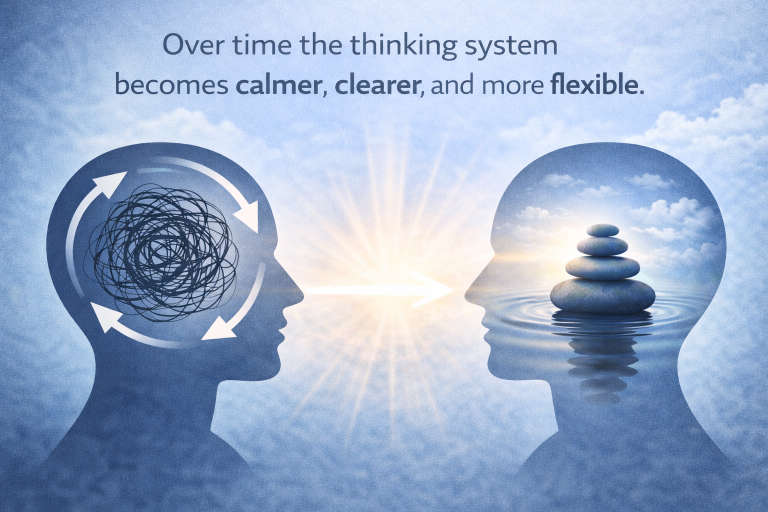
Why Overthinking Feels So Convincing
One of the reasons overthinking is so draining is that it rarely feels irrational in the moment. It feels like you are trying to do something useful. You are not daydreaming. You are not being careless. You are trying to work things out.
You want to make the right choice, avoid mistakes, feel prepared, and know where you stand. So the mind starts doing what it thinks a useful mind should do. It analyses, compares, predicts, rehearses, and tries to get certainty before you move forward.
The trouble is that certainty is often not available, at least not in the way the mind is demanding it. Life does not usually hand over perfect reassurance on request. So instead of feeling resolved, the brain keeps going. It produces more scenarios, more questions, and more possibilities to examine.
That is why overthinking can feel so exhausting. It gives the impression of progress while often producing very little that is genuinely new.
You are mentally busy, but not mentally finished.
The Overthinking Loop
This is the mechanism at the heart of the programme.
Most overthinking does not continue because the issue is genuinely urgent. It continues because the nervous system generates a feeling of urgency, and the mind starts responding to that feeling as if it means something important must be solved immediately.
A problem appears. Perhaps it is real, perhaps it is only possible, perhaps it is just a vague uncertainty. The nervous system does not like uncertainty very much, so it increases alertness. That alertness creates a push. Sort it out. Think it through. Get ahead of it. Make it safe.
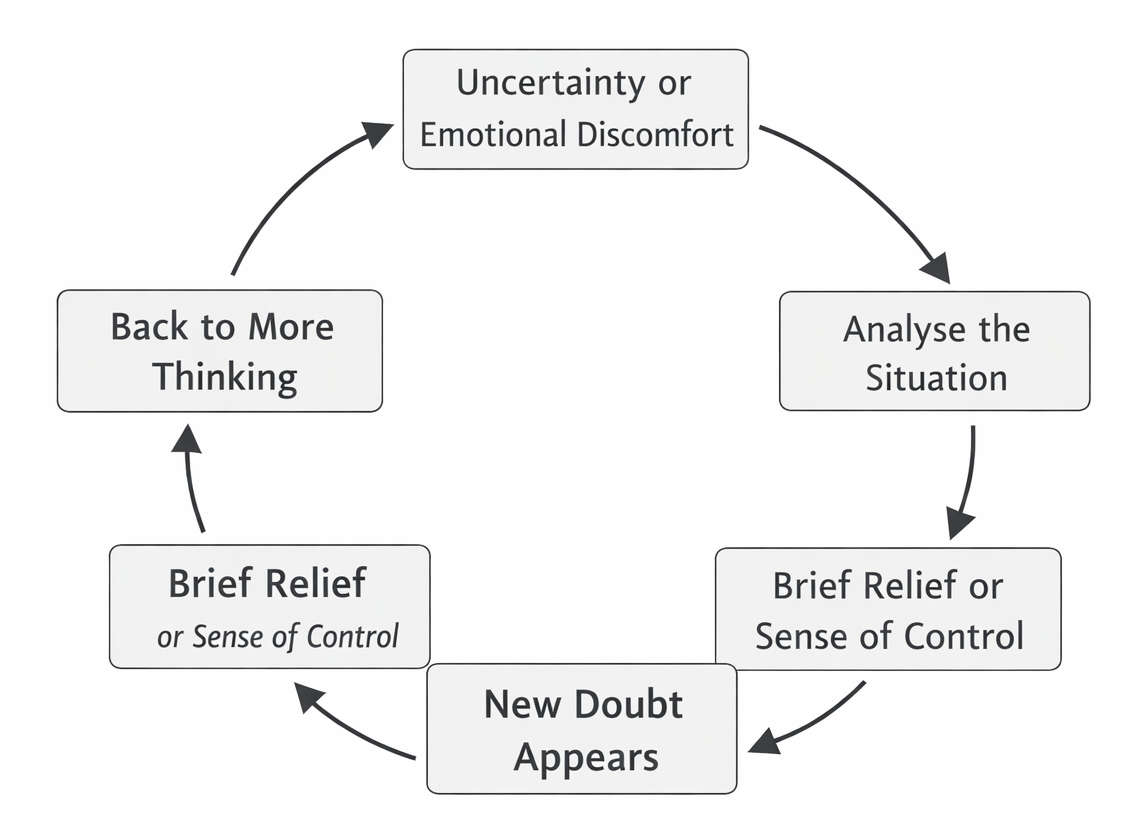
The mind then races to match that signal. It starts producing possibilities. What if this happens. What if that goes wrong. What if there is something I have missed. What is the right way to handle this. What would be the safest response. What would happen if I did nothing.
And because the process feels active, it can seem useful. But very often it is not producing new information. It is producing more urgency.
Once urgency is in the driving seat, the mind becomes less interested in clarity and more interested in continued engagement. It keeps going not because it is getting closer to a good answer, but because the system still feels as though something important is unfinished.
That is the loop. The mind feels urgency, so it analyses. The analysis keeps attention locked onto the problem. The locked attention tells the nervous system this must matter. The nervous system keeps the urgency going. And the mind produces even more analysis in response.
It is a self-feeding cycle.
Why Trying to “Stop Thinking” Often Makes it Worse
This is where many people accidentally strengthen the pattern.
Once they realise they are overthinking, they try to force the process to stop. They tell themselves to switch off. They try to push the thoughts away. They try to monitor whether the mind is still busy. They try to check whether they are calmer yet.
All of that still counts as involvement.
The nervous system does not hear, “I am fixing this.” It hears, “This is still important.”
So the system stays alert.
That is why so many people feel trapped in the strange position of trying very hard not to think, only to find that the effort itself keeps the mind switched on. The harder they push, the more active the system becomes.
The answer is not to become better at suppressing thoughts.
The answer is to become better at recognising false urgency and stepping out of the loop without turning the process into yet another thing to analyse.
A Different Way of Responding
This programme is designed to help you do exactly that.
It does not ask you to fight your thoughts. It does not expect you to empty your mind. And it does not teach you to treat every unwanted thought as a problem that must be challenged or eliminated.
Instead, it helps you understand what overthinking actually is, why the mind keeps doing it, and how to respond differently when the pull to over-analyse appears.
That shift is often smaller and simpler than people expect.
It begins with recognising that the presence of urgency does not automatically mean the issue is important right now. It continues with learning how to slow the loop, contain it, and step out of unnecessary analysis without panic. And over time, the nervous system begins learning something new, that it is safe not to engage with every scenario the mind produces.
That is where the pressure starts to reduce.
Not because the mind has been forced into silence, but because the system no longer believes every uncertain thought deserves a full investigation.
What Changes First
People often assume progress will mean a perfectly quiet mind. In practice, the first changes are usually subtler than that.
You notice the mind speeding up, and instead of automatically following it, you spot the urgency earlier.
You begin to realise that a lot of the mental activity is not useful thinking, it is the system trying to create a sense of safety by keeping you engaged.
You start asking better questions. Is this useful right now. Is this actually new, or is it the same loop again. What is the smallest next step, if any.
And perhaps most importantly, you begin learning that you do not have to solve every possibility in your head before you are allowed to carry on with your day.
That is a much bigger shift than it sounds.
Because once the mind starts discovering that non-engagement is safe, overthinking begins to lose some of its power.
Does this sound like you?
You may recognise yourself here if you often find that one problem turns into ten possibilities in a matter of minutes. If your mind likes to rehearse conversations, predict outcomes, revisit decisions, or mentally prepare for situations again and again. If you regularly end up more confused after thinking than you were before. If bedtime, quiet moments, or periods of uncertainty tend to invite a flood of analysis. Or if you know, deep down, that the mind is not helping anymore, but still feel pulled to keep going just in case the next thought will finally bring certainty.
If that sounds familiar, this programme was built for you.
If you are ready to step out of the loop, you can begin here.
What The Programme Includes
The Overthinking Programme is a structured four session process designed to help you step out of the false urgency loop and develop a calmer, more confident relationship with thinking.
Each session includes a pre-hypnotherapy video, a guided hypnotherapy session, and a post-hypnotherapy video. The videos are not just introductions or summaries. They contain important suggestions that help prepare the mind before the session and reinforce the learning afterwards. The hypnotherapy then helps the nervous system experience the shift rather than simply understand it intellectually.
There is also a companion workbook to support the process, helping you make sense of the pattern, recognise the loop more clearly, and apply what you are learning in real life.
Across the four sessions, the programme moves through a clear progression. First, it helps remove the sense of threat around a busy mind. Then it shows you how to slow and contain thought loops more effectively. After that, it teaches you how to disengage from unnecessary mental activity without fear. Finally, it helps you integrate those shifts so that calmer responding begins to feel more natural and automatic.
This is not about trying to become a different person. It is about helping your existing mind stop mistaking over-analysis for safety.
Session One
Understanding Why The Mind Speeds Up
The programme begins by helping you understand what is actually happening when the mind starts producing endless scenarios and analysis.
Most people assume their thoughts are the problem. In reality the mind is usually responding to something underneath the thoughts, a feeling of urgency generated by the nervous system when something feels unresolved.
Once that urgency appears, the mind tries to solve it by analysing possibilities, predicting outcomes, and trying to reach certainty.

You may recognise the experience of one simple question turning into ten different scenarios, each one demanding attention.
In this first session you begin separating the feeling of urgency from the actual importance of the thought. As the nervous system learns that a busy mind does not mean danger, the pressure to analyse everything begins to soften.
For many people this session brings a sense of relief. They realise their mind is not broken, it is simply responding to a signal that can be understood differently.
Session Two
Breaking The Overthinking Loop
Once the pattern becomes clearer, the next step is learning how the loop actually runs.
Overthinking often follows a predictable structure. The mind moves rapidly from one possibility to another. Each answer creates another question, and the process continues.
You may recognise moments where you suddenly realise you have been analysing the same issue for twenty minutes without moving any closer to a decision.
This session helps you spot the moment when useful thinking turns into repetitive analysis.
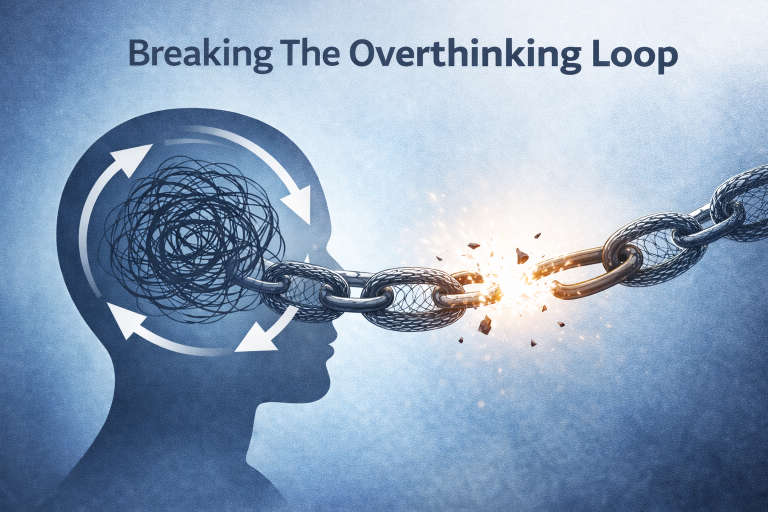
Instead of trying to force the mind to stop, you learn how to recognise the loop earlier and reduce the urgency that keeps it running. As the nervous system experiences this shift, the brain begins discovering that it does not need to analyse every possibility in order to stay safe.
Session Three
Learning To Step Out Of The Loop
By this stage many people notice something important.
They can see the overthinking happening, but the mind still feels pulled to continue analysing, just in case there is something important they might miss.
That pull is what keeps most people stuck.
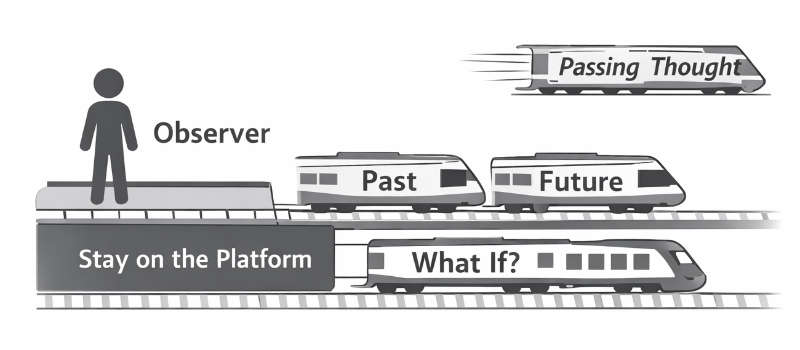
This session focuses on developing the confidence to disengage from unnecessary thinking without feeling that something dangerous is being ignored.
You may recognise the moment when the mind starts asking, “What if I have missed something?” or “Maybe I should just think this through one more time.”
Instead of being drawn back into the analysis, the nervous system begins learning that stepping away from the thought is safe.
Session Four
Developing A Calmer Relationship With Thinking
The final session helps these shifts become more natural and consistent.
At this point many people notice that thoughts still appear, but they feel different. They no longer carry the same pressure to be solved immediately.
A question may arise, but instead of opening ten new scenarios, the mind is able to leave it alone and return to the present moment.
This session strengthens that change so the nervous system becomes more comfortable allowing thoughts to pass without analysing them.

The aim is not to create a perfectly silent mind. The aim is to develop a relationship with thinking where the mind no longer feels responsible for solving every possibility.
Over time that creates the mental space most people were hoping for when they first started trying to “stop overthinking”.
Why this approach is different
A lot of advice on overthinking still works at the level of content. It tries to improve the thoughts, challenge the thoughts, replace the thoughts, or argue with them more effectively.
There is some value in that in the right context, but it often misses the more important layer.
Overthinking is rarely maintained by bad reasoning alone. It is maintained by a nervous system that has learned to treat analysis as a response to urgency.
If that layer is not addressed, the mind may simply keep producing more material to analyse.
This programme works differently because it focuses on the process, not just the content. It helps you see what is happening underneath the thoughts, and that changes the whole experience. Once you can recognise false urgency for what it is, the mind becomes easier to step out of. Once stepping out feels safe, the habit begins to weaken.
Who This is For
This programme is suitable for people who identify with overthinking as a genuine pattern in their life, whether that shows up as excessive analysing, rehearsing, second guessing, scenario building, mental problem solving, or the feeling that the mind just keeps expanding a problem long after useful thinking should have stopped.
It is especially relevant if you are tired of feeling mentally busy, tired of trying to think your way to certainty, and tired of ending up more stuck the more you analyse.
FAQ’s
Over analysing everything usually happens when the mind tries to remove uncertainty by examining too many possibilities. Instead of settling on a clear answer, the brain continues producing scenarios, questions, and interpretations in an attempt to feel certain before moving on.
This can make even simple decisions feel mentally crowded. The mind may start predicting outcomes, replaying conversations in your head, or thinking about every possibility before feeling comfortable taking action.
The difficulty is that certainty is not always available. When the nervous system still senses something unresolved, it can create a feeling of urgency that pushes the mind to keep analysing. That is what often turns normal thinking into overthinking and thought loops that feel difficult to step away from.
The aim of the programme is to help you recognise when that urgency is driving the analysis and learn how to step out of the loop rather than continuing to mentally run through scenarios.
Overthinking usually happens when the mind tries to analyse a problem from too many angles at once. Instead of moving towards a clear decision, the brain begins producing more possibilities and more scenarios to examine. This can feel like being thorough or responsible, but it often turns into mental over analysing where the mind stays busy without reaching clarity.
Replaying conversations in your head is a very common form of overthinking. The mind reviews what was said, what might have been meant, and what you could have said differently. It is usually an attempt to reduce uncertainty or prevent mistakes in the future, but the process often leads to analysing situations too much rather than helping you feel resolved.
Thinking in circles usually happens when the brain is trying to solve something that does not yet have a clear answer. Each thought creates another possibility to examine, which leads to another question. This creates thought loops where the mind revisits the same ideas repeatedly without producing new information.
No. Over analysing everything is usually a learned response to uncertainty rather than a fault in the mind itself. When the nervous system senses something unresolved, it can create a feeling of urgency. The brain then responds by analysing possibilities and predicting outcomes in an attempt to regain a sense of certainty.
When the mind starts predicting what might happen, it can begin mentally running through scenarios to prepare for possible outcomes. This can sometimes feel helpful, but when the process continues for long periods it often becomes overthinking rather than useful planning.
Learning how to stop overthinking does not usually involve forcing the mind to stop thinking. Instead it involves recognising when thinking has turned into analysis loops and responding differently to the sense of urgency that keeps the process running. As the nervous system learns that every thought does not require immediate analysis, the pressure to keep thinking often begins to reduce.
Worry and overthinking are closely related but slightly different. Worry often focuses on future risks, while overthinking can involve analysing past events, predicting outcomes, or examining decisions from multiple angles. Both can lead to thinking in circles if the mind keeps searching for certainty that is not immediately available.
Many people who struggle with overthinking assume the pattern has become permanent because it has been part of their life for a long time. In reality, the brain can learn patterns very quickly, but it can also learn new responses once it understands what is happening.
Overthinking is usually not caused by a faulty mind. It is a learned response to uncertainty where the nervous system generates urgency and the mind responds by analysing possibilities.
Once people begin recognising when they are caught in thought loops and understand why the urge to keep analysing appears, the pattern often starts to loosen. The aim of the programme is not to eliminate thinking but to help the mind develop a calmer relationship with it so that analysing situations too much is no longer the automatic response.
Even small shifts in how the mind responds to that feeling of urgency can begin changing the cycle.
A Final Word Before You Decide
You do not need to wait until your mind is quiet enough to begin.
You do not need to prove that you are doing it perfectly.
And you do not need to solve overthinking by becoming better at thinking.
What you need is a different relationship with the urgency that keeps pulling you into analysis.
That is what this programme is designed to help you build.

If you are ready to stop treating every mentally urgent moment as something that must be solved immediately, and start learning how to step out of the loop instead, this is the place to begin.
Start the Overthinking Programme today and begin developing a calmer, clearer, and more workable relationship with your mind.