
Travel anxiety is not always fear of the journey itself.
For many people, the deeper fear is being stuck somewhere your body or mind might not cope. That might be on a train, in a car, on a motorway, on a bus, in a plane, in a queue, in traffic, or far from home.
The anxious mind starts asking, “What if I panic?”, “What if I feel ill?”, “What if I need a toilet?”, “What if I cannot escape?”, or “What if I lose control and everyone notices?”
Once that fear takes hold, a journey can stop feeling like movement and start feeling like a trap. Travel becomes less about getting somewhere and more about whether you can get out if anxiety appears.
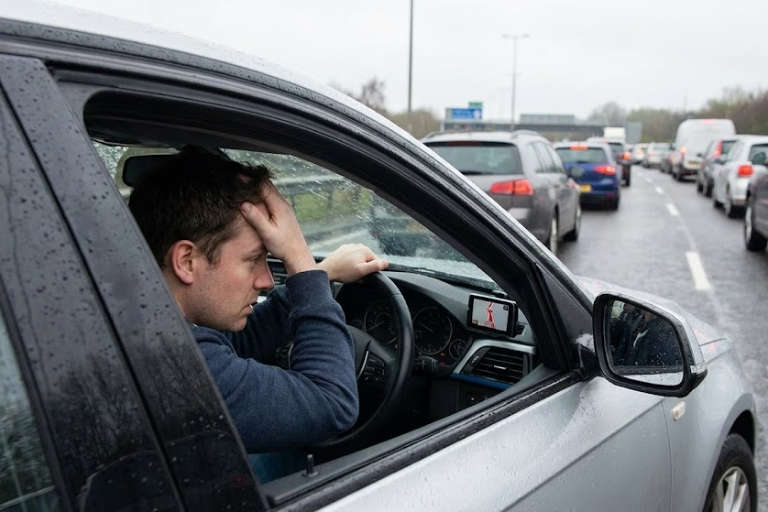
At The Surrey Institute of Clinical Hypnotherapy, we often see travel anxiety as a learned anxiety pattern. The mind and body begin to treat certain journeys, distances, delays or enclosed situations as threatening. Over time, the person may start avoiding journeys, planning escape routes, checking toilets, travelling only with safe people, avoiding motorways, or staying close to home.
This page looks at the bigger picture behind travel anxiety and the fear of getting stuck. It explains how travel anxiety can show up day to day, why travel can start to feel unsafe, how it can overlap with toilet anxiety and panic, and how hypnotherapy for travel anxiety can help your mind and body begin to experience journeys as movement again, not danger.
If most of your worry on journeys is really about needing the toilet and not being able to get to one, rather than travel itself, you may also find our page on toilet anxiety when travelling helpful.
Why does travel start to feel unsafe?
Travel anxiety is anxiety that is triggered by journeys, distance from home, transport, delays, unfamiliar places, or the feeling that you may not be able to get away easily.
For some people, travel anxiety is linked to flying, trains, buses, motorways or long car journeys. For others, it is less about the type of transport and more about what might happen while they are travelling.
They may worry about panicking, feeling ill, needing a toilet, being trapped, losing control, holding other people up, or being embarrassed in front of others.
This is why travel anxiety can be confusing. The person may say, “I am scared of travelling,” but the deeper fear is often more specific.
The journey becomes the setting for the anxiety, rather than the whole cause of it.
Travel anxiety often feels like a fear of getting stuck because the journey removes some of the person’s usual sense of control. You cannot always stop, leave, turn around, find a toilet, hide the symptoms, or get back to safety immediately.
At home, or close to familiar places, it may feel easier to manage anxiety. You can stop what you are doing, go to the toilet, leave the room, sit down, distract yourself, or avoid being seen by others.
Part of you may know that most journeys end perfectly safely, but that does not stop the racing heart, the churning stomach or the urge to escape.
Travel can feel different because it asks you to keep moving while the anxious part of the mind is asking for an exit.
On a train, bus, motorway, plane, bridge, tunnel, busy road, queue or long journey, the anxious mind may begin to notice everything that could limit escape. It may focus on traffic, distance, locked doors, other passengers, delays, lack of toilets, unfamiliar routes, or the possibility of not being able to stop.
The fear is not always, “I do not like travelling.”
It is often, “What if something happens and I cannot get out of this situation quickly enough?”
That is why travel anxiety can become so powerful. The person is not only reacting to the journey. They are reacting to the feeling that they may not have control if anxiety, panic, illness or embarrassment suddenly appears.
Why does travel anxiety develop and stay active?
Travel anxiety can start in different ways.
For some people, it begins after a difficult journey, a panic attack, feeling ill while away from home, being trapped in traffic, having a bad experience on public transport, or feeling unable to leave a situation when they needed to.
For others, there is no single obvious starting point. The anxiety may build gradually as the person begins to feel less confident travelling, more aware of distance from safety, or more worried about what could happen if something goes wrong.
The important point is that travel anxiety is often learned by the nervous system, not chosen by the person.
The mind and body begin to connect travel with threat. A journey that used to feel ordinary may start to trigger physical anxiety, anxious thoughts, and a strong urge to control the situation.
Panic symptoms can then become part of the pattern.
Once the alarm response begins, the person may notice a racing heart, tight chest, dizziness, nausea, stomach discomfort, sweating, shaking, breathlessness, or the sudden need to get away.
Those sensations can then become frightening in their own right.
The person may start thinking, “What if I panic here?”, “What if I am sick?”, “What if I need to stop?”, “What if people notice?”, or “What if I cannot cope until the journey ends?”
This can create a loop. The journey triggers anxiety, anxiety triggers body symptoms, the body symptoms increase the fear, and the person feels an even stronger need to escape, check, avoid or stay in control.
That is why travel anxiety is not always solved by simply knowing that the journey is safe. The body may still be reacting as if the person is trapped or in danger.
Over time, the person may begin to avoid certain routes, travel only at quiet times, sit near exits, check toilets, avoid motorways, travel only with someone trusted, or keep journeys short.
Those choices can feel sensible at first. They reduce anxiety in the moment. But they can also teach the brain that travelling is only safe when those conditions are in place. The coping strategy becomes part of the map, and the journey starts to feel impossible without it.
Try the free anxiety pattern finder
Anxiety can be kept active by different patterns, including body alarm, overthinking, control, distance from safety, judgement, performance pressure or access and body trust.
The free Anxiety Pattern Finder can help you identify your main anxiety pattern and the safety behaviours that may be keeping it going.
Use the free Anxiety Pattern FinderHow can travel anxiety start to shrink your life?
Travel anxiety can start with one or two difficult journeys, but over time it can begin to shape more and more of a person’s life.
They may begin avoiding certain roads, trains, buses, flights, motorways, bridges, tunnels, lifts, queues, busy places or unfamiliar routes. They may only travel with a trusted person, only travel at certain times of day, or only go somewhere if they know they can leave quickly.
Some people start building their life around what feels safe. They may turn down invitations, avoid holidays, miss family events, refuse work opportunities, or stay closer to home than they really want to.
This can be frustrating for partners, friends and family, especially when the person with travel anxiety looks capable in other areas of life.
But travel anxiety is not usually about being difficult or unwilling. It is often about the mind and body treating distance, delay, uncertainty or lack of escape as danger.
The hidden cost is not only the journeys you avoid. It is the way life begins to arrange itself around safe distances, safe routes and safe conditions, until the map of your life becomes smaller than the life you actually want.
Can travel anxiety overlap with panic, toilet anxiety or agoraphobia?
Travel anxiety does not always exist on its own.
For some people, the main fear is panic. They worry that panic symptoms will appear while they are travelling and that they will not be able to get away, calm down, or hide what is happening.
For others, the fear is linked to feeling ill, being sick, fainting, losing control, or becoming embarrassed in front of other people.
Sometimes travel anxiety overlaps with toilet anxiety. The person may not be frightened of the journey itself, but of needing the toilet and not being able to get to one in time. In that situation, traffic, trains, motorways, queues, unfamiliar routes and long journeys can all feel threatening because toilet access feels uncertain.
Travel anxiety can also overlap with agoraphobia. Travel anxiety usually focuses on journeys, transport, distance, delays, unfamiliar routes or the fear of being stuck while travelling. Agoraphobia is often broader. It can involve fear of being away from a safe place, being in open or crowded places, using public transport, standing in queues, or being somewhere escape might feel difficult.
For some people, travel anxiety is one part of an agoraphobic pattern. For others, the anxiety is mainly linked to specific journeys or types of travel.
The label is not always the most important part. What matters more is the pattern underneath the anxiety.
Is the person afraid of panic symptoms? Are they worried about being trapped? Are they scared of needing a toilet? Do they feel unsafe away from home? Do they need an escape route? Are they avoiding travel because they no longer trust their body?
Understanding that pattern helps make treatment more specific, because the journey may be the same but the fear underneath it may be completely different.
If travel anxiety is only one part of a wider anxiety problem, you may also want to explore our Anxiety And Panic section.
How can hypnotherapy help with travel anxiety?
“Hypnotherapy for travel anxiety is not about turning you into someone who loves crowded airports, it is about helping your nervous system feel safe enough to travel again.”
Hypnotherapy for travel anxiety is not simply about telling yourself to calm down.
Many people with travel anxiety already know, logically, that most journeys are safe. They may know that traffic usually clears, trains usually arrive, planes usually land safely, and most people around them are not watching them closely.
But logic does not always stop the body reacting.
That is because travel anxiety often involves an automatic alarm response. The mind and body have learned to treat certain travel situations as unsafe, and that learning can be triggered before the person has had time to think clearly.
At SICH, we are interested in the pattern underneath the anxiety: what your system thinks might happen if you are stuck, delayed, far from home, unable to stop, or unable to hide what is happening inside.
We want to understand what triggers the fear, what the person is afraid might happen, what the body does, what the person does to feel safer, and how those safety behaviours may be keeping the anxiety active.
For one person, the work may focus on panic symptoms. For another, it may focus on feeling trapped. For another, it may involve toilet access, distance from home, fear of illness, lack of control, or the need to escape.
Hypnotherapy can help by working with the automatic part of the response, not just the logical explanation. The aim is to help the mind and body begin to respond to travel in a calmer, more proportionate way, so a journey can start to feel like movement again rather than a trap.
What happens in hypnotherapy for travel anxiety?
Hypnotherapy for travel anxiety starts by understanding how the anxiety works for you.
We will usually want to know where the anxiety happens, when it started, what situations make it worse, what you fear might happen, what you do to cope, and how much your life has changed because of it.
That might include questions about cars, trains, buses, motorways, flying, traffic, queues, tunnels, bridges, public transport, unfamiliar places, toilet access, panic symptoms, illness fears, and travelling with or without other people.
The purpose is not to force you into situations before you feel ready.
The purpose is to understand the anxiety pattern clearly enough to begin changing it: what your mind is protecting you from, what your body has learned to expect, and what safety has come to depend on.
Treatment may involve helping the body reduce its automatic alarm response, changing the meaning the mind has attached to travel, reducing the need for safety behaviours, and rebuilding confidence in situations that have started to feel unsafe.
The work is usually tailored to the person, because travel anxiety does not look the same for everyone.
Someone who is anxious on motorways may need different work from someone who is frightened of trains. Someone whose anxiety is panic-based may need different work from someone whose main fear is needing a toilet. Someone who can travel with a partner but not alone may need different work from someone who avoids all long journeys. The aim is to understand what safety has come to depend on, so the work can focus on the part of the pattern that is actually keeping the fear in place.
Can travel anxiety be treated online?
In many cases, yes.
Online hypnotherapy can be suitable for travel anxiety, especially where the main work is about the anxiety pattern, the body alarm, safety behaviours, panic symptoms, avoidance, or the fear of being stuck.
Some people prefer online sessions because they do not have to manage a difficult journey before treatment has started. Others prefer to come to the clinic because they want the experience of travelling to appointments to become part of their progress.
The best option depends on the person, the severity of the anxiety, where they live, and what they want to achieve.
If you are not sure whether online or in person hypnotherapy would be better, we can talk this through before you book.
What can progress with travel anxiety feel like?
Progress does not always mean suddenly loving every journey.
For many people, progress begins with feeling less alarmed before travelling, being able to think more clearly during a journey, needing fewer safety behaviours, or recovering more quickly after anxiety has been triggered.
It may mean being able to travel further from home, use a route that has been avoided, sit somewhere less controlled, tolerate delays more easily, or make plans without anxiety deciding everything in advance.

For some, progress means taking a train again. For others, it means driving on a motorway, visiting family, going on holiday, attending work events, or simply feeling less trapped by the thought of travel.
The aim is not to force travel for its own sake.
The aim is to help life become bigger again, so travel can become something that carries you towards life rather than something that threatens to trap you inside anxiety.
Frequently Asked Questions About Hypnotherapy For Travel Anxiety
No. Fear of flying can be one form of travel anxiety, but travel anxiety can also involve cars, trains, buses, motorways, queues, tunnels, bridges, traffic, distance from home, or unfamiliar places.
For many people, the real fear is not the transport itself, but being unable to escape, stop, get help, find a toilet, or regain control if anxiety or panic appears.
Anticipatory anxiety is very common with travel anxiety.
The mind begins rehearsing what might go wrong before the journey has even started. The person may imagine traffic, panic, illness, delays, embarrassment, toilet problems, or being unable to get away.
By the time the journey begins, the body may already be in an alarm state.
Yes. For some people, travel anxiety is strongly linked to toilet anxiety.
The fear may not be travel itself, but needing the toilet and not being able to get to one in time. This can make traffic, public transport, motorways, queues, unfamiliar routes and long journeys feel unsafe.
If this sounds familiar, our page on toilet anxiety when travelling may be a better starting point.
Not always.
Travel anxiety is usually focused on journeys, transport, distance, delays or the fear of being stuck while travelling. Agoraphobia is often broader and may involve feeling unsafe away from home, in open places, crowded places, queues, public transport, or situations where escape feels difficult.
There can be overlap, but the most useful question is often, “What is the person actually afraid might happen?”
It may still be possible to help, even if the pattern has been present for a long time.
Longstanding travel anxiety often means the mind and body have had more time to practise the fear response, avoidance and safety behaviours. That does not mean nothing can change. It means the pattern needs to be understood carefully and worked with at the right pace.
Can we help you with travel anxiety?
You do not need to know exactly what type of travel anxiety you have before contacting us. You can simply tell us what has been happening, where the anxiety shows up, what you are avoiding, and what you would like to be able to do differently.
If travel anxiety, panic, toilet anxiety, agoraphobia or the fear of getting stuck has started to limit your life, you are welcome to contact us and talk through whether hypnotherapy may be suitable for you.