
Most people look forward to days out, weekends away or a simple drive to see family. If you live with toilet anxiety on journeys, every trip can feel like a problem to solve. Long before you set off you may be checking routes, counting service stations, worrying about traffic and quietly asking yourself whether you can risk it at all.
Many clients tell us there is a sentence that plays in their head on repeat. “I dread any journey in case I cannot get to a toilet in time.” If that line feels uncomfortably familiar, you are not being dramatic. Toilet anxiety on journeys is a real pattern, and it can make even short trips feel unsafe.

This page looks specifically at toilet anxiety on journeys, the car trips, traffic delays, commuting, and the moments you realise you might be stuck with no easy exit. If you want travel and holiday focused guidance, read toilet anxiety when travelling. For the wider picture and our overall approach, see hypnotherapy for toilet anxiety.
“I dread journeys anywhere in case I cannot get to a toilet in time. Other people get excited about days out or holidays. I just feel trapped before I even leave the house.”
What Toilet Anxiety On Journeys Really Is
Toilet anxiety on journeys is not simply being a bit fussy about toilets. At its core it is a fear of needing the toilet when you believe you will not be able to reach one in time. The worry is usually about being trapped with no way out, rather than about the toilet itself. For many people the fear becomes so strong that even thinking about journeys can trigger a surge of physical symptoms.
This is different from classic shy bladder or shy bowel problems where the main fear is about other people hearing, seeing or judging. With toilet anxiety on journeys, the focus is usually on distance, timing and control. Thoughts tend to sound like, what if I am stuck in traffic or what if the train toilets are out of order.
It also sits differently from general anxiety about going out. Many people with toilet anxiety on journeys are otherwise confident travellers. They may be happy to drive, fly or use public transport as long as they feel they can reach a toilet quickly. The trouble starts when that certainty fades, queues, delays, roadworks, security checks or crowds all feed the same prediction, I will not get there in time.
Underneath, toilet anxiety on journeys is a learned loop between brain, body and prediction. The nervous system has started to treat certain types of travel as a genuine threat. Once that loop is in place, it can run even when you are medically fine and objectively safe.
Why Journeys Magnify Urgency Fear
When we map out toilet anxiety on journeys with clients, the pattern is surprisingly consistent. It normally begins well before the day of travel. You think about the drive, the train, the flight or the coach trip and the what if questions start. What if there is a traffic jam, what if the toilets are closed, what if I get stuck in the middle of a row and cannot get out.
“Before any journey I am on Google Maps, checking services, trying to find every possible toilet. By the time I get in the car I already feel like I have done three journeys in my head and my body is on red alert.”
Those thoughts trigger body sensations. A flip in the stomach, a heavy feeling in the bowel or bladder, a rush of heat, light headedness, tension across the chest. The mind then reads those sensations as proof that there is a problem. Now it is not just, what if I need the toilet, it becomes, I can feel it building already, something is wrong with me.
Next come the coping behaviours. Extra visits to the toilet “just in case”, strict rules about what and when you can eat or drink, obsessive checking of maps and timetables, insisting on certain seats, and sometimes cancelling the journey altogether. For a while, these steps seem to work. You make it through a journey, or you avoid it, and there is a burst of relief.
The problem is that the relief teaches the nervous system that panic was the right response. Your brain quietly concludes, we survived because we avoided, or we only coped because we did all those safety behaviours. That is how toilet anxiety on journeys becomes self reinforcing. The more you try to control every detail, the more threatening ordinary travel begins to feel.
Over time, the loop can spill into day to day life. People begin to plan their whole week around avoiding situations where they might be far from a toilet, even if those situations have never actually led to an accident. The body is safe, but the alarm system is still firing as if every journey is an emergency.
Different Journeys, The Same Underlying Pattern
If the fear expands beyond the trip itself, holidays, flights, staying somewhere unfamiliar, or journeys far from home, read our toilet anxiety when travelling page for the broader “going places” version.
Toilet anxiety on journeys can look very different on the surface depending on where you are travelling, however underneath the core prediction is usually the same, I will be trapped and I will not reach a toilet in time.
In cars and on motorways, people often describe a fear of tailbacks, roadworks and packed traffic with no easy exit. The sight of red brake lights stretching into the distance can be enough to trigger a wave of urgency. Even when service stations are clearly marked, toilet anxiety on journeys can convince you that you will never reach them in time.
“Sitting in traffic on a motorway is my worst nightmare. All I can think is, if I need the toilet now there is nowhere to go, no way out, and everyone will see. It stops me saying yes to things other people do without thinking.”
On buses, trains and tubes, the focus shifts to being between stops. There may be no toilet on board at all, or the only toilet is at the far end of a crowded carriage. Clients talk about scanning constantly for the toilet sign, watching to see if anyone goes in, worrying about whether it will be locked, or out of order, or too busy to use when panic hits.
Planes and airports bring their own challenges. Security queues, boarding, sitting on the runway and long stretches with the seat belt sign on can all flare toilet anxiety on journeys. Some people will only fly if they can sit in an aisle seat near the toilet. Others avoid flying completely because the idea of being thousands of feet up with limited control feels intolerable.
Even simple days out, walks, beaches, coach trips, staying with friends or sharing a bathroom in a hotel can become complicated. You might find yourself declining invitations, making excuses or building elaborate stories to hide the true reason. The places change, however the inner script remains remarkably consistent, this journey is not safe, I do not trust my body, I must stay close to a toilet at all times.
Common Journey Safety Behaviours That Backfire
If you live with toilet anxiety on journeys, you have probably developed a long list of ways to cope. Toilet mapping, using apps or street view to check locations in advance. Restricting food and drink before and during travel. Sitting in “safe seats” near exits or toilets. Carrying spare clothes or wipes in case of the worst. Only journeys at certain times of day, or insisting that you drive so you can decide when to stop.
These strategies are completely understandable. They are your best attempt to feel safer in situations that have begun to feel dangerous. The difficulty is that they train the nervous system in the wrong direction. Every time toilet anxiety on journeys tells you that safety depends on perfect planning and you respond by tightening the rules, the brain hears, we only survived because we controlled everything.
Over time, the goalposts move. Things that were once comfortable now feel risky unless all your safety behaviours are in place. A short drive begins to feel like a long haul flight. A twenty minute train ride can take up your whole day in planning, worry and recovery. Coping strategies are meant to make life bigger, however with toilet anxiety on journeys they often do the opposite, shrinking the world without ever truly calming the system.
Part of recovery is not just adding new tools, it is gently stepping back from the strategies that keep your nervous system in training mode, always on the lookout for danger. That is where a structured, specialist approach can make a difference, because changing toilet anxiety on journeys is not about willpower, it is about retraining a pattern that lives deep in the subconscious.
When Medical Conditions Sit Alongside Toilet Anxiety
Many people who come to us with toilet anxiety on journeys also have a diagnosis such as irritable bowel syndrome, overactive bladder or another digestive or urinary condition. Those diagnoses are important, and it is essential that you have any new or worrying symptoms checked by your GP or specialist. We work alongside the medical picture rather than instead of it.
What we often see, though, is that once the medical side is reasonably stable, the anxiety about what might happen on a journey takes on a life of its own. You may have stretches of time at home when your body is settled, yet toilet anxiety on journeys still flares the moment you think about leaving that safe base. The loop begins to be driven more by prediction than by the condition itself.
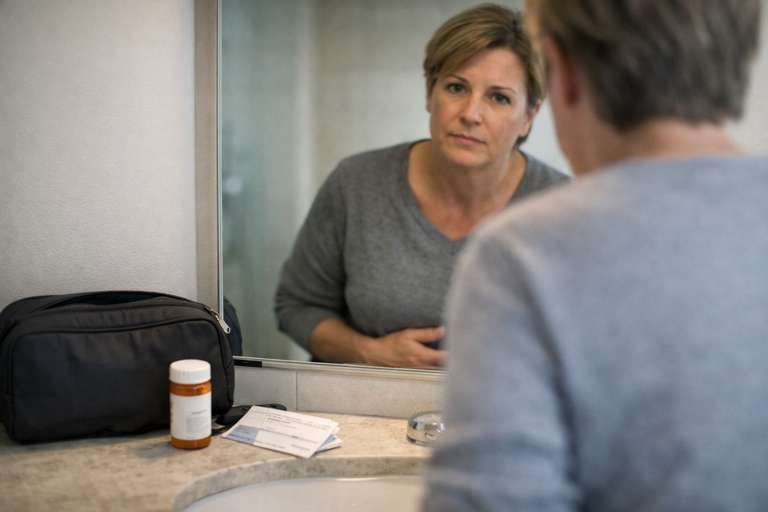
“My IBS is mostly under control now, yet the moment a trip is mentioned my stomach goes into meltdown. At home I can be fine. As soon as I think about leaving, the panic and urges start. It feels less like a bowel problem and more like my brain has decided journeys are dangerous.”
We invite clients to be curious about where the biggest suffering now sits. Is it only the physical symptoms, or is it also the constant planning, the scanning, the cancellations and the way toilet anxiety on journeys has started to dictate what is possible in everyday life. When the learned threat response has become the main problem, working with that pattern directly can open up choices again, even when a medical diagnosis remains in the background.
A Real Life Story Of Toilet Anxiety On Journeys
To protect confidentiality this is a composite story, however every detail is drawn from the kinds of accounts we hear in clinic.
Sarah was in her forties, with a busy job and a family she loved visiting three hours up the motorway. She used to do the drive without thinking. Over a couple of difficult years, after a bout of stomach illness and a stressful time at work, something shifted. On one journey she was caught in standstill traffic after an accident. The moment she realised there was no way to move, her stomach flipped, heat rushed through her body and her thoughts went straight to, I am going to have an accident, here, in this car.
She did not. The traffic cleared, she reached the services and nothing catastrophic happened. However her nervous system had taken a snapshot, motorway plus traffic equals danger. The next time she planned the journey, toilet anxiety on journeys was already waiting. She could feel her stomach tighten the night before. On the day itself she was in and out of the toilet repeatedly, ate almost nothing and argued with herself all the way down the driveway about whether to turn back.
By the time she came to see us, she had started cancelling visits. When friends suggested days out, she would offer to host instead. She felt embarrassed to explain the real reason, so she talked about being tired, or too busy, while inside the story was different. “I dread journeys anywhere in case I cannot get to a toilet in time.” She had a folder of screenshots of service stations, route options and back up plans, and yet toilet anxiety on journeys just kept getting stronger.
In sessions we mapped out the loop together. We identified that key traffic jam as a sensitising event and worked with it directly, so that her nervous system no longer treated it as live danger. We helped her rehearse, in hypnosis, what it would feel like to sit in a car, on that same stretch of road, with her body calm and her mind less reactive to normal bodily sensations.
We also agreed small, realistic steps. At first she drove shorter routes at quieter times, gradually allowing herself to eat and drink more normally. She practised noticing the first wave of toilet anxiety on journeys and using new responses rather than defaulting straight to panic and avoidance. There were wobbles, and it was not a straight line, however over a handful of sessions her world began to open up again. When she eventually managed that three hour journey with one planned stop, she described it not as a miracle, but as getting her ordinary life back.
That is what successful treatment usually looks like. Not perfection, not a body that never feels urgent again, but a nervous system that no longer treats every journey as unsafe and a person who feels able to travel without toilet anxiety on journeys ruling every decision.
How We Work With Toilet Anxiety On Journeys
At The Surrey Institute Of Clinical Hypnotherapy we see toilet anxiety on journeys as a loop that can be retrained, rather than a life sentence. We start by listening carefully to your story. Which journeys are hardest, what you have already tried, how toilet anxiety on journeys affects the rest of your life. Together we map out the pattern so it makes sense, rather than feeling like random chaos.
We then use hypnotherapy and related tools to work with the subconscious part of the mind that is currently predicting danger. That might include identifying and reprocessing sensitising events, building new, calmer templates for journeys, and helping your nervous system separate normal bodily sensations from genuine emergencies. The aim is not to force you into terrifying situations, it is to change the prediction that sits underneath toilet anxiety on journeys so your body can settle.
“I used to cancel trips at the last minute because of toilet anxiety on journeys. Now I still get flickers of worry, but they pass. I can sit in the car, on a train or even on a plane and remind myself that my body is capable and I am not trapped any more.”
Alongside the hypnotic work, we agree practical steps that feel achievable. That could be driving a short familiar route with slightly fewer safety behaviours, or taking a short train journey with a clearer plan for how to respond to the first wave of anxiety. We are not interested in pushing you through exposure for the sake of it. We are interested in building experiences where your nervous system can genuinely learn, that was all right, I coped, I did not need toilet anxiety on journeys to protect me.
For a broader story about living with the condition in everyday life, including at home and work, you may also find our article anxious about needing the toilet helpful.
Taking The Next Step When Every Journey Feels Unsafe
If you recognise yourself in these descriptions, it is worth saying clearly, you are not the only one. Toilet anxiety on journeys is far more common than most people realise, partly because it is so hard to talk about. Many clients tell us that simply reading an account that matches their inner experience is a relief in itself.
You do not have to tackle this alone. In our clinic we work with people from across the UK and beyond who feel their life has started to shrink around toilet anxiety on journeys. With the right map and the right tools, it is possible to retrain the loop, travel more freely and begin to plan trips for the destination rather than for the toilets along the way.
If you would like to explore treatment in more detail, you can start with our main toilet anxiety page which explains how sessions work. For a wider view of other issues that often sit alongside toilet anxiety on journeys, such as general worry or panic, you can also visit our information on anxiety and panic, or browse the problems we help with section of the site.
When you are ready, you are welcome to contact The Surrey Institute Of Clinical Hypnotherapy for an initial conversation about toilet anxiety on journeys and how it affects your life. We can talk through what has been happening, answer your questions and suggest a way forward that feels realistic rather than overwhelming.