
On 25 and 26 July 2026, we will be making film about toilet anxiety, its a new short public awareness film called Toilet Anxiety: The Fear Nobody Understands.
This is something I have wanted to make for some time. During more than 20 years of working with thousands of people affected by toilet anxiety, I have repeatedly seen how difficult it can be for someone to explain what they are experiencing.
People who have never lived with toilet anxiety may struggle to understand it. They might think it is simply worrying about where the nearest toilet is, or assume that the person has a fear of toilets. Some may even treat it as a joke.
But toilet anxiety is not a fear of toilets. That would be a toilet phobia.
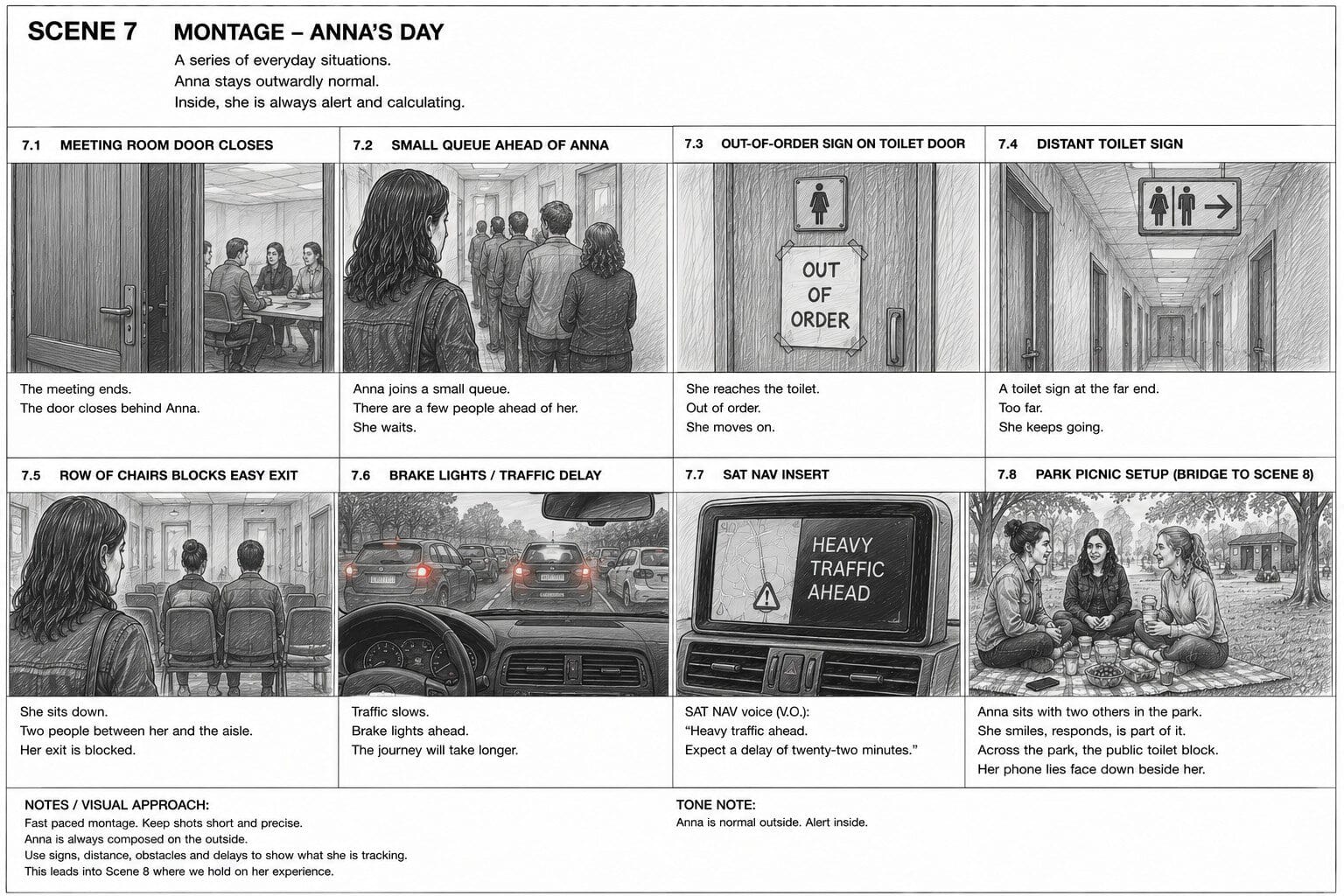
Toilet anxiety is the fear of needing a toilet and not being able to reach one in time. That difference matters because it helps us understand why the problem can begin influencing so many apparently unrelated parts of a person’s life.
We hope this film about toilet anxiety will allow people to see that experience from the inside.
The fear other people do not see
Someone living with toilet anxiety can appear perfectly calm and capable. Other people may have no idea how much calculation is taking place beneath the surface.
Before leaving home, the person may already be thinking about the journey. How long will it take? Will there be traffic? Are there toilets along the route? What if the train stops between stations? What if the toilet is occupied, closed or out of order?
They may check where the toilets are as soon as they arrive somewhere. They might sit close to an exit, avoid queues, turn down invitations or leave events early. Food and drink may be restricted before a journey, even when the person is hungry or thirsty.
Eventually, decisions that once seemed ordinary can begin to feel complicated.
A trip to the cinema is no longer simply a trip to the cinema. It involves the journey, the seating position, the length of the film and the possibility of having to leave in front of other people. A meeting is not just a meeting. It is a period during which leaving the room might feel awkward or embarrassing.
Even visiting friends can become difficult if the person is uncertain about access to the bathroom.
To everybody else, they may just seem quiet, cautious or reluctant to join in. The real reason often remains hidden.
The relief of discovering you are not alone
One of the things I hear surprisingly often from new clients is:
“Oh my God, I thought I was the only one with this problem until I found your website.”
That reaction tells us something important. Toilet anxiety is not only distressing, it can also be extremely isolating. Because people rarely talk about it, someone may spend years believing that nobody else thinks or behaves as they do.
They may invent explanations for avoiding journeys, leaving events early or declining invitations. Even those closest to them might not know the real reason.
Finding an accurate description of toilet anxiety can bring an enormous sense of relief. The person has finally found language for something they may have struggled to explain, even to themselves.
We want the film to create a similar moment of recognition. Someone watching Anna’s story may see their own private calculations reflected on screen and realise that they are not alone.
Why toilet anxiety is so easily misunderstood
Part of the problem is the name itself.
“All I have ever found is sites talking about a fear of using a public toilet. That’s just not me. I’m happy if there is a public toilet. In fact, I go looking for them to feel safe.”
When we hear the word anxiety attached to something, we tend to assume that the person is frightened of that particular object or situation. This has led to toilet anxiety being confused with a fear of toilets or a fear of using a public toilet.
They are not the same problem.
Another comment I regularly hear from clients is:
That distinction is crucial.
Someone who is frightened of using a public toilet may avoid entering or using one. Someone with toilet anxiety may actively search for public toilets because knowing where they are provides a sense of safety.
The fear is not usually the toilet. It is the possibility of needing one and being unable to reach it in time.
There may be no toilet available. Access might be blocked or delayed. The toilet may be occupied, closed or out of order. The person may have to ask permission to leave. They might be trapped in traffic, sitting in the middle of a row or travelling somewhere unfamiliar. Sometimes it is simply the uncertainty of not knowing when the next toilet will be available.
This can create a powerful conflict between the need to remain in control and the ability to trust the body.
As confidence in the body decreases, the person may begin relying more heavily on checking, planning and precautionary toilet visits. These actions can seem sensible because they bring short term relief. Unfortunately, they can also reinforce the belief that constant preparation is necessary to remain safe.
Life can gradually become organised around preventing something that may never have happened.
Why we are telling the story through drama
We considered the different ways in which we might make a film about toilet anxiety.
A conventional documentary could include interviews with therapists, explanations of the condition and testimony from people who have experienced it. That approach has value, but toilet anxiety is an intensely private problem. Many of the people affected by it have spent years hiding what they feel, sometimes from close friends, colleagues and even family members.
Asking real people to describe those experiences on camera could place them in a very uncomfortable position. It might also result in a film that explains toilet anxiety without ever allowing the audience to feel it.
We therefore decided to make a scripted film about toilet anxiety using actors.
The characters are fictional, but the thoughts, calculations and behaviours shown in the film are drawn from patterns I have encountered repeatedly during more than two decades of clinical work.
Our central character, Anna, appears capable from the outside. She gets on with her life and does what needs to be done. Yet much of her attention is quietly occupied by access, distance, delay and the possibility of escape.
We do not want the audience simply to be told that Anna is anxious. We want them to experience the changing shape of an ordinary situation as she experiences it.
A traffic jam, a queue or a closed door may mean very little to most people. For Anna, it could change everything.
More like a short film about toilet anxiety than a health documentary
Toilet Anxiety: The Fear Nobody Understands is being made as a scripted, documentary style drama. Although it has an important public awareness purpose, we want it to feel more like a short film than a conventional health information video.
This is not intended to be a lecture. Nor is it an advertisement disguised as a film.
We want to tell a recognisable human story about someone whose world has gradually become smaller, even though the people around her may not realise it.
That meant finding a story with a genuine emotional conflict at its centre. For us, that conflict is control against body trust.
Anna believes that remaining safe depends upon preparation and control. She needs to know where the toilets are, how quickly she can reach them and what she will do if something goes wrong. Yet the more she tries to guarantee access, the less able she becomes to trust her own body.
The film about toilet anxiety explores what that costs her and what may have to change before she can begin reclaiming her freedom.
A short film and a five part web series
The story is being created in two formats.
It will be released as a complete short film, allowing Anna’s experience to unfold as one continuous story. It will also be divided into a five part web series.
The web series will make the story easier to discover and watch online. Each episode will explore a different stage of Anna’s experience while remaining part of the larger story.
This matters because someone may first encounter the film while searching for an explanation of one particular aspect of their anxiety. They might recognise the need to plan every journey, the panic created by delayed access or the constant search for reassurance before they recognise the wider pattern as toilet anxiety.
The five episodes give us more opportunities to reach people where they are already looking for answers. Together, however, they form the complete story of how the pursuit of control can gradually undermine trust in the body.
Although the film can be watched as five episodes, it will not feel like a collection of educational videos. Each part belongs to the same scripted and emotional journey.
What we hope the film will achieve
Our first aim is recognition.
Someone living with toilet anxiety may watch the film and recognise thoughts or behaviours they have never been able to put into words. They may realise that they are not the only person who checks routes, avoids unfamiliar places or becomes anxious when access to a toilet feels uncertain.
Recognition alone does not resolve the problem, of course. But it can reduce some of the confusion and isolation surrounding it.
Our second aim is understanding.
We hope that partners, relatives, friends and employers will gain a better sense of what toilet anxiety can involve. From the outside, avoidance may look unreasonable or frustrating. It is easier to respond with patience when you understand the fear driving the behaviour.
Most importantly, we want to challenge the assumption that the answer is simply to make sure there is always a toilet nearby.
Knowing that a toilet is available may provide reassurance, but life cannot offer that guarantee in every situation. Lasting change involves rebuilding confidence and trust in the body, rather than making freedom permanently dependent upon immediate toilet access.
Filming begins in July
Filming will take place on 25 and 26 July 2026. Over those two days, we will begin turning years of clinical observation, writing and planning into a finished short film and five part web series.
There will still be considerable work to do afterwards, including editing, sound, music and the careful shaping of Anna’s story. We will share more about the production as it develops and announce when the complete film and individual episodes are available to watch.
For now, the important thing is that this misunderstood problem is being brought into the open.
Toilet anxiety can quietly influence journeys, relationships, work, social activities and the choices someone makes every day. It deserves to be understood properly.
If the experiences described here feel familiar, you can read our full guide to toilet anxiety, its causes, symptoms and treatment.