
On this page
Childhood Phobias, When Fear Becomes a Problem
Most children have childhood phobias at some point. It is almost like a rite of passage. The dark, dogs, the sound of the hoover, strangers, going upstairs alone, sleeping in their own room, the idea of being sick, the thought of you leaving the house without them. Some fears are very short lived and a bit random, to be honest, they show up and then fade when the child realises they can cope.
But sometimes the fear does not behave like a phase. It starts to organise the child’s choices. It makes mornings harder, school harder, car journeys harder, and even the simple bits of life, like popping to a friend’s house or going to a birthday party, can begin to feel like a negotiation.
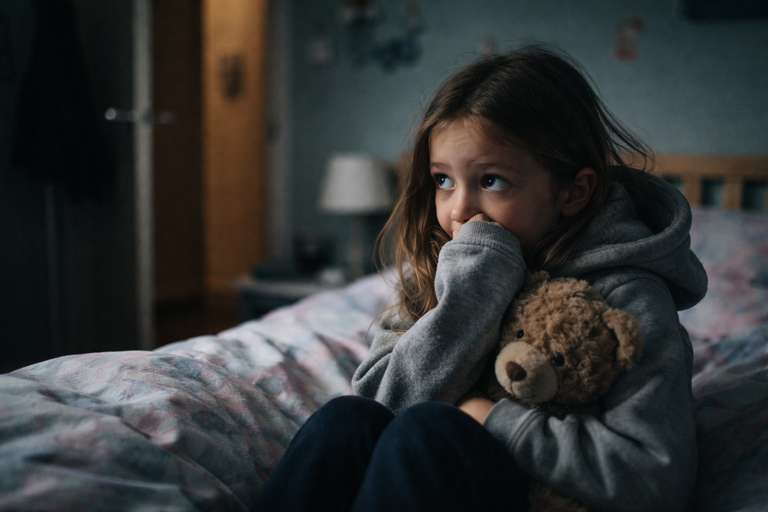
This page is a practical explainer for parents. I am not trying to label your child, and I am definitely not trying to panic you. I just want you to be able to spot when fear is becoming a child phobia, and what you can do early, before it quietly shrinks their world. This is the bit many people mean when they search for childhood phobias, even if they would not use that phrase out loud.
If you want the wider context, see Children & Teenagers. For our full overview of how we help, start here, Hypnotherapy for Children.
Normal fears vs childhood phobias
One of the hardest parts for parents is that fear becomes phobia and can look dramatic even when it is fairly normal. Children do not do subtle panic. They go from fine to tears in about half a second, which is why it is easy to think, this must be serious. Sometimes it is, sometimes it is not.
In general, normal fears are a bit more flexible. A child might resist, complain, cling, or try to bargain, but with support they can usually do the thing. The fear comes and goes. And crucially, it tends to reduce once they have repeated experiences of coping.
A phobia is usually more sticky. The child’s body responds as if something is genuinely dangerous right now. You can see it in their face and posture, and you can hear it in the urgency of their voice. Even if the trigger is objectively safe, the child is not faking it. Their nervous system is doing a real alarm response. In other words, phobias in children are often body first, and reason second.
These are some signs that fear might be moving into phobia territory, and that you may be looking at childhood phobias rather than a passing wobble.
- Intensity The reaction is big and fast, panic, shutdown, anger, or complete refusal.
- Body symptoms Tummy pain, nausea, trembling, breathlessness, dizziness, needing the toilet, or feeling sick.
- Avoidance They start arranging life to stay away from the trigger, and it begins to spread.
- Life impact It affects school, sleep, friendships, travel, or family routines.
If the main pattern is worry spirals, constant reassurance seeking, or lots of different fears rather than one main trigger, our child anxiety page may be a better fit, Anxiety and worry in children and teenagers.
Why phobias stick
I think it helps to stop thinking of a phobia as a personality trait. It is usually a learned prediction. Something happens, maybe a frightening moment, maybe a story they heard, maybe a sensation in their body that they did not understand, and the brain files it under danger. Childhood phobias can start this way, a single moment, then a pattern that repeats.
Then the child meets the trigger again, a dog, a balloon, a lift, a school corridor, an insect, a crowded assembly, a tummy sensation, and the body alarm switches on. Heart rate up, breathing changes, muscles tighten, thoughts narrow. They want out. They might cry. They might fight. They might freeze.
And then something important happens. Avoidance brings relief. The body settles. The brain learns a simple lesson, avoiding worked. Next time it triggers faster. The fear feels more convincing. Parents can accidentally get pulled into the same learning loop too, because when you have seen your child panic, you will do a lot to prevent that happening again. This is one reason a childhood phobia can spread from one trigger to several.
This is why the well meant approach of forcing a child to face the fear can sometimes backfire. It can work if the child has enough support and the step is small enough. But if it is too big, it teaches the brain, I was right, this was dangerous. The same is true of endless reassurance if it becomes the only tool. Reassurance can calm the moment, but it can also send the message that the fear is a real threat that needs managing.
So the goal is not to eliminate fear completely. That would be unrealistic. The goal is to help the nervous system learn, I can have the feeling and still be safe, and I can recover afterwards.
What parents can do early
There is a temptation to look for the one perfect technique. In reality it is usually a handful of small, consistent moves that shift things. Not overnight, and not in a perfectly straight line either.
First, name what you are seeing in a calm way. Not a lecture, not a big talk, just something like, your alarm has gone off. That can help a child separate the feeling from their identity. It also helps you stay steady, which matters more than most parents realise.
Second, reduce the emergency message. If you look terrified, or furious, or you rush around trying to fix it instantly, the child’s nervous system gets more evidence that it really is dangerous. This is hard, because you are human too, but it is one of the biggest levers you have.
Third, aim for small exposure steps that end in success. This is where parents often get stuck. They either avoid completely, or they push too hard. The middle ground is boring but powerful. Tiny, repeatable steps. A child can feel the alarm and still complete the step, then return to calm. That teaches the brain something new. If you are dealing with childhood phobias, this kind of paced practice is usually far more effective than a sudden leap.
Fourth, watch for spread. If the fear starts expanding to more places, more situations, or more body sensations, that is usually a sign to intervene sooner rather than later. Spread is common with phobias in children, it can move from one object to whole situations.
If you are not sure what steps are appropriate, or the fear has already started to shape daily life, start with the overview here, Hypnotherapy for Children. It explains how we work and what sessions are like, so you can decide if it fits.
If you want to explore related ways we help children and teenagers, these pages may be useful.
Next Steps
If a child phobia is shrinking their world, the best next step is usually to map the loop and choose small, practical steps that teach safety without forcing overwhelm. It does not need to be dramatic to be worth addressing. Childhood phobias often look like small lifestyle changes at first, then they gather momentum.
Start with our main Hypnotherapy for Children page, or browse the wider Children & Teenagers section.
If you would like to talk it through, you can contact us here, Contact SICH.
1 thought on “Childhood Phobias; Should They be Sorted Out Early?”