
Many people begin exercising because they want to lose weight. They join a gym, start walking regularly or follow a new fitness programme, expecting the scales to reward their effort. When very little happens, or their weight actually increases, it can be confusing and frustrating. They may decide that they are doing something wrong, that their body is somehow resisting weight loss or that they simply need to exercise harder.
The reality is more complicated. Exercise can improve fitness, strength, mobility, mood, sleep and general health, but it does not always produce the dramatic weight loss people expect. Some people lose weight through exercise, some lose only a modest amount and others see no meaningful change on the scales. A small number may even gain weight.
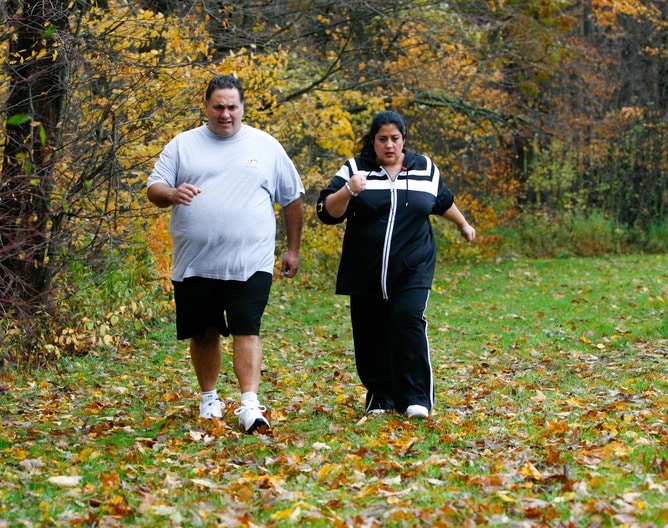
That does not mean exercise is pointless. It means that exercise and weight loss are not as directly connected as the familiar “calories in, calories out” explanation suggests.
If exercise and weight loss have started to feel like a battle with the scales, it may help to look beyond activity alone. Our main guide to hypnotherapy for weight loss explains how we help people change eating patterns driven by habit, cravings or emotion.
What Happens When People Begin Exercising?
One study from Arizona State University followed 81 previously sedentary women who completed supervised treadmill sessions three times a week for 12 weeks. Overall, the group did not lose a meaningful amount of weight or body fat, although the individual results varied considerably. Some women lost weight, while others gained weight or body fat.
The important point, which was rather lost in some of the reporting at the time, is that the women became fitter. The study was not evidence that exercise was harmful or that people should avoid it. It demonstrated that improved fitness does not always produce an equivalent reduction on the scales.
The researchers also did not monitor everything the women ate or all their physical activity outside the supervised sessions. They could therefore measure what happened, but they could not say with certainty why individual women gained or lost weight.
A larger review of 116 clinical trials gives us a more balanced picture of exercise and weight loss. It shows that exercise does contribute to reductions in weight, waist measurement and body fat, but the average weight loss is usually modest. The response also differs considerably from person to person. Someone can follow the same exercise programme as another person and achieve a very different result.
The Body May Compensate for Exercise
One reason exercise does not always produce the expected weight loss is compensation. When someone begins using more energy through exercise, their body and behaviour may respond in ways that reduce the overall energy difference.
They may feel hungrier and eat slightly more without consciously deciding to do so. A larger meal, an extra snack or a sugary drink can replace much of the energy used during an exercise session. This does not mean the person is weak or deliberately sabotaging themselves. Increased appetite is a normal response for some people.
Someone may also become less active during the rest of the day. After exercising, they might sit down for longer, drive instead of walking or generally move less because they feel tired. Again, this can happen without them noticing.
The amount of compensation varies. Some people experience very little and lose weight relatively easily. Others experience a larger increase in appetite or an unconscious reduction in their everyday movement. This helps explain why a standard exercise programme can produce such different results.
It also explains why telling someone to simply exercise more is not always helpful. If the underlying eating patterns remain unchanged, adding more exercise may lead to more hunger, more self reward and a growing feeling that they are putting in considerable effort for very little result.
Why Exercise Still Matters
It would be a mistake to move from “exercise alone may not cause substantial weight loss” to “exercise does not matter”. Those are completely different statements.
Regular physical activity can improve cardiovascular fitness, strength, mobility, blood pressure, insulin sensitivity and mental wellbeing. It can also reduce waist measurement and body fat even when total body weight changes very little. The scales cannot distinguish between fat, muscle, fluid and the other changes taking place within the body.
Current NICE guidance on physical activity and weight management recommends encouraging physical activity even when it does not result in weight loss, because the wider health benefits remain important. Exercise should therefore be viewed as something that supports health, rather than merely a way to cancel out food.
The most useful type of activity is usually something that can be continued. That may be walking, swimming, cycling, dancing, resistance training, gardening or structured exercise. There is little benefit in forcing yourself through a punishing routine that you dislike and are likely to abandon after a few weeks.
Anyone with a medical condition, injury, significant mobility problem or concern about beginning exercise should seek appropriate medical advice. The answer is not to avoid activity altogether, but to find a suitable and realistic approach.
Weight Loss Is Not Simply About Burning More Calories
People often treat weight loss as a mathematical problem. If they use more calories than they consume, they expect weight to fall at a predictable rate. The basic principle of energy balance is real, but human behaviour and physiology make the practical outcome far less tidy.
Eating is influenced by hunger, habit, emotion, stress, boredom, reward, social situations and the availability of food. People may eat automatically while watching television, finish food because it is on the plate or use particular foods to change how they feel. None of this is adequately addressed by telling someone to attend another exercise class.
This can create a particularly unhelpful cycle. A person exercises because they want to lose weight, feels entitled to a treat afterwards, sees little change on the scales and then decides they must exercise even harder. Exercise begins to feel like punishment for eating, while food becomes the reward for enduring it.
A more useful approach is to separate the two. Exercise can be something you do for health, strength, energy or enjoyment. Eating habits can then be examined in their own right, without expecting physical activity to compensate for every decision involving food.
Where Hypnotherapy May Help
Hypnotherapy should not be presented as a way to speed up the metabolism or guarantee weight loss. It cannot replace appropriate nutrition, medical advice or physical activity. What it may help with is the automatic behaviour surrounding food.
Some people understand what they would like to change but repeatedly find themselves eating without making a conscious decision. They may struggle with cravings, emotional eating, habitual snacking, portion sizes or the belief that food is the only reliable reward available to them.
In these cases, the difficulty is not a lack of information. Most people already know which foods are likely to support their health and which ones they eat mainly for comfort or pleasure. The problem is applying that knowledge when an established pattern takes over.
Our approach to hypnotherapy for weight loss focuses on the individual patterns that influence eating. The aim is to help clients make more appropriate decisions around food without becoming obsessed with dieting, calorie counting or trying to exercise away everything they have eaten.
No responsible treatment can guarantee a particular amount of weight loss. People have different bodies, medical histories, lifestyles and relationships with food. Progress should be judged honestly and individually, rather than against a dramatic promise.
A More Balanced Approach
Exercise can contribute to weight loss, but it is rarely the complete answer. Its effect on the scales is often modest, individual responses vary and compensation can reduce the expected result. None of that removes the considerable health benefits of being physically active.
The sensible conclusion is not “do not exercise”. It is that exercise should not carry the entire burden of weight loss.
Choose physical activity that is realistic and appropriate for you. At the same time, look at the habits, emotions and automatic decisions affecting what and how much you eat. When those areas begin working together, change is more likely to feel sustainable rather than like a constant battle between food and exercise.