
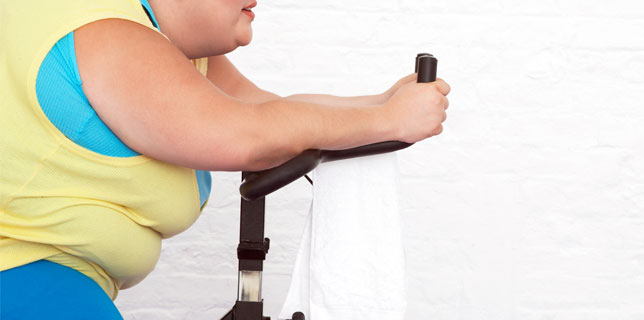
If you have ever asked yourself, does exercise help you lose weight, you are in good company. It is the advice most people hear first, move more, burn it off, earn your food.
And yet a lot of people discover something awkward. They do the workouts, they feel fitter, sometimes they feel proud, but the scales barely move. Or they move a bit, then drift back. That is usually the moment the self blame kicks in, and it is often completely misplaced.

This page sits in our Eating And Weight section and links closely with our main page on Hypnotherapy For Weight Control. If you are not sure where to start, that main page is usually the best entry point, and this article focuses on one specific belief that keeps people stuck.
Our position is simple. Exercise is brilliant for health, mood, strength, and blood sugar regulation, but if the question is does exercise help you lose weight in a predictable, reliable way, for many people the honest answer is, not much. The eating pattern is usually the lever that moves the needle.
Why The Numbers Do Not Add Up
The simple story is, burn calories, lose weight. Real bodies do not behave like a simple story, which is why the question does exercise help you lose weight has such a frustrating answer for so many people.
When people increase exercise, appetite often increases too. Sometimes it is obvious hunger. Sometimes it is cravings, snacking, bigger portions, or that quiet inner permission slip, I worked hard so I deserve this. There can also be a less obvious effect, people move less for the rest of the day because they feel more tired, so some of the exercise gets cancelled out without anyone noticing.
So the problem is not willpower. It is that the system self balances, and eating is the easiest place for that balancing to show up. That is why we focus first on stabilising eating, then movement becomes a health choice rather than a weight loss punishment.
The Myth, And Why It Matters
Part of the frustration here is the cultural message that exercise can undo eating choices. It sounds encouraging, but it often keeps people stuck in a loop, push harder, get hungrier, feel more deprived, then rebound. If you keep asking does exercise help you lose weight and the answer keeps being “not really”, this is usually why.
London Cardiologist, Dr Aseem Malhotra, blamed the food industry for encouraging the belief that exercise could counteract the impact of unhealthy eating.
Dr Malhotra said: “An obese person does not need to do one iota of exercise to lose weight, they just need to eat less. My biggest concern is that the message that is being fed to the public suggests you can eat what you like as long as you exercise. That is unscientific and wrong. You cannot outrun a bad diet.”
The experts even likened their tactics as “chillingly similar” to those of Big Tobacco on smoking and said celebrity endorsements of sugary drinks and that the association of junk food and sport must end.
Evidence And Research
One reason this topic keeps causing confusion is that exercise has clear health benefits, but weight loss outcomes are often smaller than people expect.
A widely shared editorial in the British Journal of Sports Medicine argued that physical activity does not promote weight loss, and that public messaging has often overplayed exercise as the answer to obesity, while diet quality is a primary driver. Malhotra, Noakes, Phinney, 2015.
A systematic review and meta analysis on real world weight change found substantial compensation, meaning weight loss from exercise is often far less than predicted by calorie maths, even when people comply with the intervention. This kind of finding helps explain why people keep asking does exercise help you lose weight, and keep feeling disappointed by the result. International Journal of Obesity, 2014.
Reviews looking specifically at energy compensation during exercise interventions note that people vary widely, and that the body often adapts by increasing intake or reducing other expenditure.
That variability is one reason we do not treat exercise as the primary weight loss tool, we focus on stabilising eating behaviour first. Predictors of Energy Compensation, 2015.
We would put it like this, exercise is a health multiplier. It improves mood, cardiovascular health, blood sugar regulation, strength, and resilience. But if the eating pattern is reactive, guilt driven, or all or nothing, exercise rarely fixes that. It can even become part of the problem, because people start using it as a reason to eat more.
What We Do Instead
If someone comes to us for weight control, we do not build a plan around burning calories. We build a plan around making eating calmer, steadier, and more automatic, so it stops feeling like a daily negotiation.
This is where hypnotherapy can help. It is not about forcing motivation. It is about changing the automatic drivers underneath eating, stress relief, comfort seeking, reward loops, habit cues, and that familiar swing between strict control and “I have blown it so I may as well keep going”.
Once eating is steadier, movement becomes easier to add in for the right reasons. Health, mood, strength, and long term maintenance. Not because you are trying to pay for food with exercise. So when people ask us does exercise help you lose weight, we answer it properly, movement helps your body, food pattern shifts your weight.
Our Fridge Freezer Eating Plan
For some clients, we may use a structured approach we have called the Fridge Freezer Eating Plan (FFEP). The aim is to reduce hunger and reduce the amount of thinking you have to do about food, because for many people, thinking about food all day becomes part of the struggle.
Clients who have used the FFEP have said things like, “What amazed me is that I didn’t feel hungry at all, but I still lost 4 to 5lbs every week.”
Others have said, “It was easy to do because I didn’t have to think about food.”
And, “I found it really easy because I could eat what I wanted at the weekends.”
We use hypnotherapy to support the behavioural change needed to let this style of eating become more natural, rather than a short lived burst of willpower.
A quick safety note, the FFEP must only be done for short bursts of 6 to 8 weeks, and only for five days a week. Rapid loss can be a strain on the body if it is pushed for too long, so we keep clear limits and focus on what is realistic.
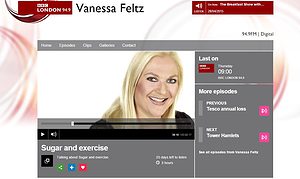
Hear Paul Howard On The Vanessa Feltz Show
Paul Howard, a weight specialist at The Surrey Institute of Clinical Hypnotherapy, explains the SICH approach, why focusing on appetite and eating patterns often works better than relying on exercise, and why the plan is designed to be used in controlled phases.
If you are still asking does exercise help you lose weight, this clip shows why the answer is usually, eating matters more.
Vanessa is sceptical in the way a lot of people are sceptical, which is part of why this is useful. It reflects the pushback many people feel when they have been told for years that the answer is simply to exercise more.
Interview with Vanessa Feltz
After the broadcast, a consultant endocrinologist at a leading London hospital contacted us to say the core point is sound, if weight loss is the goal, intake and appetite regulation are the drivers, and exercise, while excellent for health, is not the main mechanism for shifting weight.
If you want the wider framework and what we do clinically with eating patterns, start here, Hypnotherapy For Weight Loss.
If You Want Help With Weight Control
If this page has sounded familiar, you might be stuck in the same loop many people get trapped in, trying to fix eating with exercise, then feeling frustrated when it does not work. We can help you build a steadier eating pattern, reduce guilt driven rebound, and make weight control feel more workable.
If you are not sure where to start, begin with our main weight loss page, or browse the Eating And Weight pages.
If you would like to talk it through, you are welcome to contact us and we can help you work out what approach fits your situation.
1 thought on “Does Exercise Help You Lose Weight?”